
Florida’s climate is unlike anywhere else in the continental United States. You’re dealing with intense UV exposure, high humidity, salt air corrosion along the coasts, and the ever-present threat of hurricane-force winds. Choosing the wrong fence material here doesn’t just mean extra maintenance — it can mean a complete replacement after a single storm season.
That’s why picking the right fence material for Florida weather is one of the most important decisions a homeowner can make. The good news is that several materials hold up exceptionally well in tropical weather conditions, and understanding their differences will save you money, time, and frustration. This guide breaks down everything you need to know, from fence durability and maintenance to real-world performance and pricing.
Before you even think about materials, it’s worth knowing that a property survey before installing your fence can prevent costly legal disputes with neighbors. Once that’s sorted, you can focus on what really matters: finding a fence that survives Florida’s punishing climate year after year.
Top Fence Materials for Florida Weather
Florida’s unique combination of heat, moisture, salt air, and storm risk eliminates many fence materials that work perfectly well in other states. The options that consistently perform best are vinyl, aluminum, and certain wood or composite alternatives. Each has distinct advantages depending on your priorities, budget, and location within the state.
| Material | Hurricane Resistance | Rust/Rot Resistance | Maintenance Level | Average Lifespan |
|---|---|---|---|---|
| Vinyl | Moderate-High | Excellent | Very Low | 20-30 years |
| Aluminum | High | Excellent | Low | 30-50 years |
| Pressure Treated Wood | Moderate | Moderate | High | 10-15 years |
| Composite | Moderate | Good | Low-Moderate | 15-25 years |
| Chain Link | High | Moderate | Low | 15-20 years |
Vinyl Fencing
Vinyl fence is one of the most popular choices for Florida homeowners, and for good reason. It doesn’t rot, doesn’t absorb moisture, and holds up well against the mold and mildew resistance challenges that plague other materials in humid climates. Vinyl is essentially immune to the moisture-related problems that destroy wood fences within just a few years in Florida.
UV resistance is another major selling point. High-quality vinyl fencing is manufactured with UV inhibitors built directly into the material, preventing the fading and brittleness that sun exposure causes over time. This matters enormously in a state where the sun beats down intensely for most of the year.
From a privacy fence standpoint, vinyl is hard to beat. It comes in solid panel configurations that block sightlines completely, making it ideal for backyard privacy. The panels are also available in a wide range of styles, from traditional picket designs to contemporary horizontal slat configurations.
One consideration is wind load rating. Solid vinyl privacy panels can act like a sail in high winds, which is a real concern during hurricane season. Proper installation with reinforced posts set deep in concrete is essential for maximizing hurricane resistance in Florida’s storm-prone regions.
Aluminum Fencing
Aluminum fence is arguably the best all-around performer for Florida’s climate. It offers outstanding rust resistance, requires minimal maintenance, and carries excellent wind load ratings when properly installed. Unlike wrought iron fence, aluminum doesn’t corrode when exposed to salt air, making it the superior choice for coastal Florida properties.
The powder coated finish applied to most aluminum fencing creates a durable barrier against the elements. This coating resists chipping, fading, and corrosion, keeping the fence looking sharp for decades without repainting. Coastal homeowners especially benefit from this feature, since salt air corrosion can devastate unprotected metal surfaces within just a few seasons.
Aluminum fencing also tends to comply easily with Florida Building Code requirements, particularly in wind-rated zones. Many manufacturers offer products specifically engineered to meet the strict wind resistance standards required in high-velocity hurricane zones throughout South Florida.
The main limitation of aluminum is privacy. Traditional aluminum fence designs are open and decorative, making them better suited for pool enclosures, front yards, and property boundary marking than for creating a secluded backyard retreat. Privacy panel inserts are available but add to the overall cost.
Wood and Composite Alternatives
Wood fence has a timeless appeal, and many Florida homeowners still choose it despite the climate challenges. Pressure treated wood is the most viable natural wood option, as the chemical treatment process helps resist rot, insects, and moisture absorption. Cedar wood is another option worth considering, as it contains natural oils that provide some inherent resistance to decay.
The honest reality is that even the best wood fencing requires significant ongoing maintenance in Florida’s tropical weather. Annual sealing, staining, or painting is necessary to extend the fence lifespan, and even with diligent care, most wood fences in Florida need replacement within ten to fifteen years.
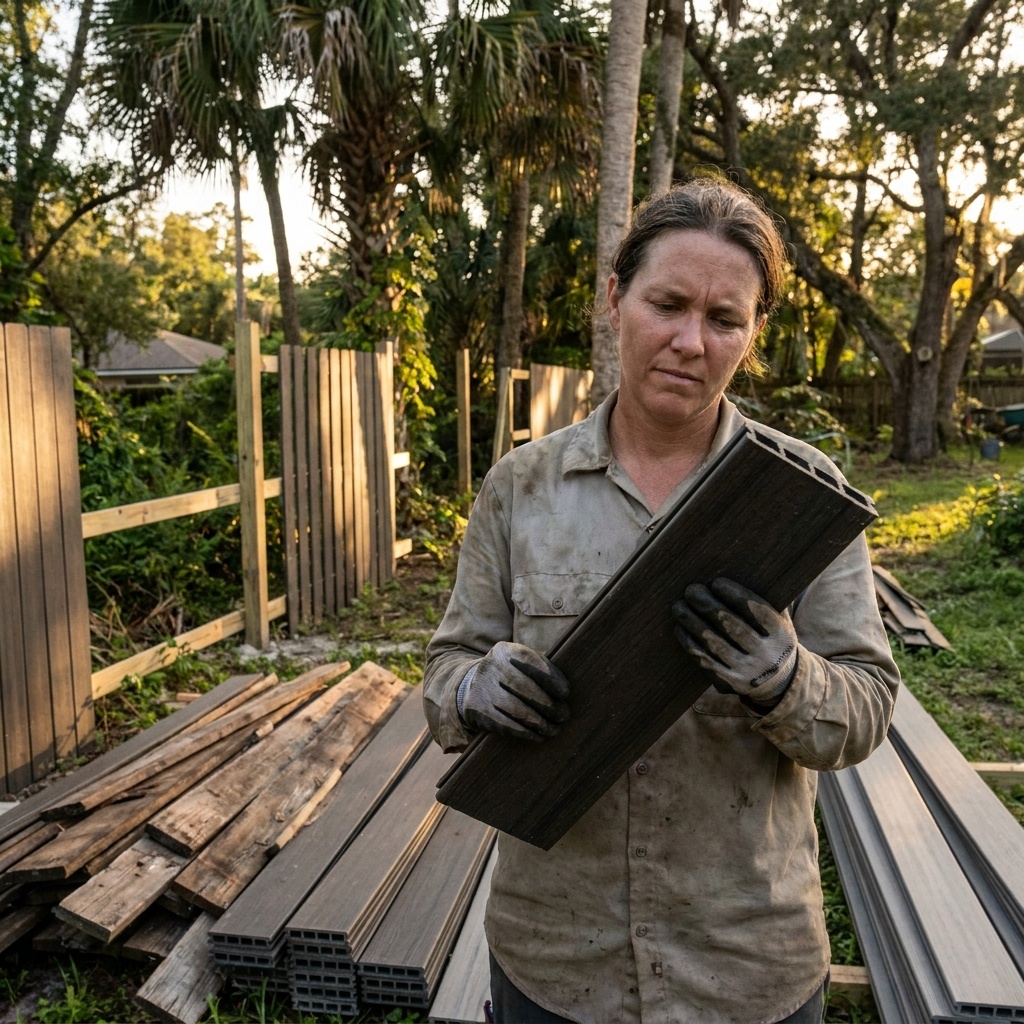
Composite fence bridges the gap between wood’s aesthetic appeal and vinyl’s low-maintenance durability. Made from a blend of wood fibers and recycled plastic, composite materials resist moisture, mold, and UV damage far better than natural wood. The fence lifespan for composite products typically ranges from fifteen to twenty-five years with minimal upkeep.
- Pressure treated wood offers the lowest upfront cost among wood options
- Cedar wood provides natural beauty with moderate rot resistance
- Composite fencing mimics wood grain while resisting Florida’s humidity
- Both wood types require regular sealing to prevent mold and mildew growth
- Composite costs more initially but saves money on fence maintenance over time
Features and Benefits Comparison
Understanding how each material performs against Florida’s specific climate challenges helps you make a smarter investment. The three biggest threats to any fence in this state are humidity, salt air corrosion, and hurricane-force winds. Every material handles these threats differently, and your location within Florida plays a significant role in which factors matter most.
Durability Against Humidity, Salt, and Hurricanes
Humidity is the constant enemy of fence materials in Florida. The state’s average relative humidity hovers well above comfortable levels for most of the year, creating ideal conditions for mold, mildew, rot, and corrosion. Vinyl and aluminum both excel here because neither material is porous or susceptible to moisture absorption.
Salt air corrosion is a specialized concern for properties within a few miles of the coast. Salt particles carried by ocean breezes settle on surfaces and accelerate corrosion dramatically. Aluminum with a quality powder coated finish and vinyl are the only two mainstream fence materials that genuinely resist salt air damage without requiring constant protective treatments.
Hurricane resistance depends heavily on both material choice and installation quality. Chain link fence actually performs surprisingly well in high winds because wind passes through the open mesh rather than pushing against a solid surface. Aluminum fencing with proper post depth and concrete footings also handles wind load well. Solid vinyl privacy panels face the greatest hurricane risk due to their surface area.
Florida Building Code sets specific requirements for fence construction in wind-rated zones, and these codes exist for good reason. Working with a licensed contractor who understands local wind load rating requirements is essential, particularly in South Florida and coastal communities where hurricane standards are strictest.
Maintenance and Longevity
Fence maintenance requirements vary dramatically between materials, and in Florida’s climate, low-maintenance options deliver real financial value over time. The less time and money you spend maintaining your fence, the better your overall return on investment.
Vinyl fencing requires almost no maintenance beyond occasional washing with a garden hose. There’s no painting, staining, or sealing required. The fence lifespan for quality vinyl products in Florida typically reaches twenty to thirty years with minimal intervention.
Aluminum fencing is similarly low-maintenance. The powder coated finish rarely needs attention, and the material itself won’t rust or rot. Occasional inspection of post connections and hardware is the primary maintenance task, making aluminum one of the most hands-off options available.
- Vinyl: rinse with water occasionally, inspect posts annually
- Aluminum: check hardware connections, clean with mild soap as needed
- Pressure treated wood: seal or stain annually, inspect for rot and insect damage
- Composite: occasional cleaning, inspect for any surface damage
- Chain link: check for rust spots, apply rust-inhibiting coating if needed
Wood fencing demands the most attention. Annual sealing is the minimum requirement, and many Florida homeowners find themselves repainting or restaining every two to three years to maintain appearance and structural integrity. Mold and mildew resistance treatments are also necessary in shaded or consistently damp areas.
Not sure which material fits your yard?
Free estimates across Pinellas County and Tampa Bay. 4.9★ on Google (166 reviews). Once your fence is approved, most installs take 1 to 3 days. Where a permit’s required, we pull it for you.
Pricing and User Experience
Budget is always a factor, and fence installation cost in Florida varies considerably based on material, linear footage, height, and local labor rates. Understanding the full cost picture — including long-term maintenance expenses — gives you a more accurate comparison between materials.
Cost Breakdown
Getting a clear picture of what a fence actually costs before committing to a material helps you budget realistically and avoid surprises. Material prices fluctuate, but the general cost hierarchy in Florida remains fairly consistent across the state.
Chain link fence is typically the most affordable option, both for materials and installation. It’s a practical choice for large properties where budget is the primary concern and aesthetics are secondary. The trade-off is limited privacy and a utilitarian appearance that some HOA regulations may restrict.
Pressure treated wood sits in the mid-range for upfront costs but carries the highest long-term expense due to maintenance requirements and earlier replacement timelines. Cedar wood costs more initially than pressure treated options but offers slightly better natural durability.
- Chain link: lowest upfront cost, minimal maintenance expenses
- Pressure treated wood: moderate upfront, high long-term maintenance costs
- Vinyl: moderate-to-high upfront, very low ongoing costs
- Composite: higher upfront, low-to-moderate ongoing costs
- Aluminum: higher upfront, very low ongoing costs
Vinyl and aluminum carry higher initial fence installation costs but deliver significantly lower lifetime expenses. When you factor in the cost of annual wood maintenance, staining supplies, and eventual replacement, vinyl and aluminum often prove more economical over a ten to twenty year period.
Real-World Performance in Florida
Florida homeowners who’ve lived through multiple hurricane seasons consistently report that aluminum and vinyl fences outperform wood in real-world conditions. Wood fences that survive a major storm often show significant damage — warped boards, broken pickets, and compromised post integrity — that requires expensive repairs.
Coastal residents particularly favor aluminum for its salt air corrosion resistance. Properties near the Gulf or Atlantic coast that installed aluminum fencing with quality powder coated finishes report minimal degradation even after many years of direct salt air exposure. The same properties with wrought iron fence or untreated steel experience visible rust and structural weakening much sooner.
Composite fencing has gained a strong following among Florida homeowners who want the look of wood without the maintenance burden. Users consistently report satisfaction with composite’s resistance to the mold and mildew problems that plague natural wood in shaded, humid areas of their yards.
Vinyl privacy fence users in Florida’s interior regions — away from the coast — report excellent long-term performance. The primary complaint involves solid panels in areas with frequent tropical weather events, where improper installation led to panel failures during high winds. Properly installed vinyl with reinforced posts performs reliably.
Alternatives and Buying Advice
Beyond the primary options, a few additional materials deserve consideration depending on your specific situation. And regardless of which material you choose, the buying and installation process involves several important steps that directly affect your fence’s long-term performance.
Other Options to Consider
Wrought iron fence offers unmatched visual elegance and exceptional strength, but its vulnerability to rust makes it a challenging choice for Florida’s humid, salt-laden environment. If you love the look of wrought iron, aluminum fencing with decorative styling delivers a nearly identical appearance with far superior rust resistance and a much longer fence lifespan.
Chain link fence deserves more credit than it typically receives. In terms of hurricane resistance, chain link’s open structure allows wind to pass through rather than building pressure against a solid surface. For large properties, agricultural uses, or areas where security matters more than aesthetics, chain link remains a practical and cost-effective solution.
Bamboo and other natural materials occasionally appear in Florida landscaping, but they’re generally not recommended as primary fence materials. They deteriorate quickly in tropical weather conditions and offer minimal structural integrity against wind events.
Key Factors for Choosing and Installing
Your location within Florida matters enormously. Coastal properties face salt air corrosion challenges that inland properties don’t. South Florida’s stricter Florida Building Code wind requirements affect material and installation choices. HOA regulations in many Florida communities restrict fence height, style, and sometimes material, so checking these rules before purchasing is essential.
Knowing exactly where your property ends is critical before any installation begins. Understanding how to locate your property lines before the project starts prevents disputes and ensures your fence is built in the right location. This step is non-negotiable regardless of which material you choose.
Post installation depth and concrete footing quality are arguably more important than material choice for hurricane resistance. Even the strongest fence material fails if posts aren’t set deep enough or secured properly. Florida’s sandy soil in many regions requires extra attention to post depth and footing diameter to achieve adequate stability.
- Verify HOA regulations before selecting style, height, or material
- Confirm local Florida Building Code wind load requirements for your zone
- Choose post depth and concrete footing specifications appropriate for your soil type
- Select UV resistance ratings appropriate for your sun exposure level
- Factor in salt air corrosion risk based on your distance from the coast
- Get multiple quotes and verify contractor licensing before committing
Working with an experienced local contractor who understands Florida’s specific climate challenges and building requirements makes a significant difference in the final result. A knowledgeable installer will recommend appropriate post depths, hardware specifications, and installation techniques that maximize your fence’s performance in tropical weather conditions.
Conclusion
Florida’s climate demands more from fence materials than almost any other environment in the country. The combination of intense UV exposure, persistent humidity, salt air corrosion, mold and mildew pressure, and hurricane-force winds eliminates many options that work perfectly well elsewhere.
Aluminum fencing stands out as the top overall performer for most Florida homeowners, offering exceptional rust resistance, low maintenance requirements, strong wind load ratings, and a fence lifespan that can reach fifty years with proper care. Vinyl fencing is the best choice for privacy applications, delivering excellent mold and mildew resistance and UV resistance with minimal upkeep. Composite fencing offers a compelling middle ground for those who want wood aesthetics without the maintenance burden.
Wood fencing, while beautiful and affordable upfront, carries significant long-term costs in Florida’s tropical weather environment. Pressure treated wood and cedar wood can work with diligent maintenance, but they require a genuine commitment to annual upkeep to achieve reasonable fence durability.
Whatever material you choose, invest in quality installation. The best fence material in the world underperforms when posts aren’t set correctly or hardware isn’t rated for Florida’s conditions. Take the time to research your local building requirements, understand your HOA regulations, and work with a licensed contractor who knows Florida’s unique climate challenges inside and out.
Ready to pick your Florida-ready fence?
Free estimates across Pinellas County and Tampa Bay. 4.9★ on Google (166 reviews). Once your fence is approved, most installs take 1 to 3 days. Where a permit’s required, we pull it for you.
FAQ
What is the most hurricane-resistant fence material for Florida?
Aluminum fencing with properly set concrete footings and appropriate post depth offers the best hurricane resistance among decorative fence options. Chain link fence also performs well because its open structure allows wind to pass through rather than building pressure. Solid vinyl privacy panels face the greatest risk in high winds due to their surface area, though proper installation significantly improves their performance. Always verify that your chosen material and installation method meets local Florida Building Code wind load rating requirements for your specific zone.
Is wood fencing viable in Florida’s humid climate?
Wood fencing is viable in Florida but requires significant ongoing commitment to fence maintenance. Pressure treated wood and cedar wood are the best natural wood options, as both offer better resistance to rot and moisture than untreated alternatives. Annual sealing or staining is the minimum maintenance requirement, and even with consistent care, most wood fences in Florida need replacement sooner than vinyl or aluminum alternatives. Composite fence is worth considering as a wood alternative that delivers similar aesthetics with dramatically better mold and mildew resistance and a longer fence lifespan in Florida’s tropical weather.
How do vinyl and aluminum fences compare in cost over time?
Both vinyl and aluminum carry higher upfront fence installation costs than wood or chain link, but both deliver lower lifetime expenses due to minimal maintenance requirements. Aluminum typically costs slightly more to install than vinyl and generally lasts longer. Vinyl is generally the better value for privacy fence applications, while aluminum excels for decorative and open-style installations. When comparing total cost of ownership over a twenty-year period, both materials consistently outperform wood once you factor in the ongoing expense of wood maintenance, staining, and eventual replacement.