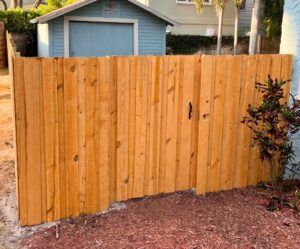
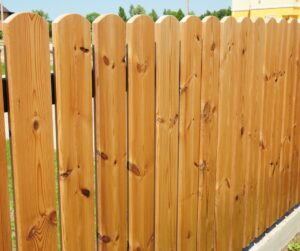
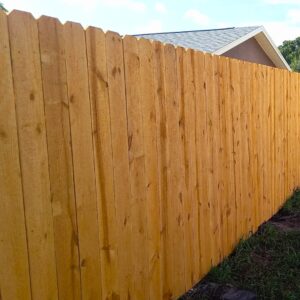
Wood fencing brings warmth and a traditional look that vinyl and metal can't match. With the right material (pressure-treated southern yellow pine, cedar, or cypress) and the right installation depth, a wood fence holds up to Florida humidity, termites, and storm season for 15 to 20 years.
We install dog-ear, board-on-board, shadowbox, picket, and split-rail wood styles across Pinellas, Hillsborough, Pasco, and Manatee Counties. Every project starts with the right post depth for your wind zone, treated lumber rated for ground contact, and a permit pulled with the county before we set the first post.
Get a Free EstimateWe install a wide range of wood fence styles to suit every property and preference. From classic dog-ear and shadowbox to modern horizontal designs — all built with premium pressure-treated YellaWood.
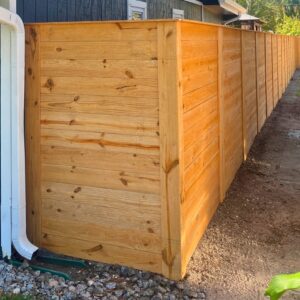
Every wood fence installation is completed with a matching custom gate built to the same specifications as your fence. Walk gates, double drive gates, and custom configurations are all available.
Pressure-treated southern yellow pine is the standard for Florida fencing because it's treated to resist termites and fungal decay in our humidity. Cedar is more rot-resistant naturally and ages to a silver-gray patina, but costs about 40% more. Cypress is a Florida-native option that performs similarly to cedar and is locally sourced.
A properly installed pressure-treated wood fence lasts 15 to 20 years in Florida if maintained with stain or sealer every 2 to 3 years. Without sealing, expect 8 to 12 years before significant board replacement is needed. Coastal properties see shorter lifespans due to salt-spray and UV exposure, which is why we often recommend vinyl or aluminum within a mile of the Gulf.
Pressure-treated lumber is rated for ground contact and resists the subterranean termites responsible for most Florida damage. Posts set in concrete with proper drainage extend that protection. Untreated decorative trim and cap rails should be stained or sealed annually as a precaution.
Florida humidity, UV, and rainy season attack untreated wood fences faster than in drier climates. A good stain does four things at once: blocks UV damage that turns wood gray within a few years, repels rain so moisture doesn't penetrate the grain, prevents mold and mildew growth in our humidity, and lets you pick a color that complements your home. A stained wood fence typically lasts 5 to 8 years longer than an unstained one with fewer board replacements along the way.
Every 2 to 3 years for the first decade, then every 3 to 5 years once the wood has weathered and stabilized. Stain protects against UV and moisture; sealer adds water-shedding. Either prevents the gray-checking and board-twisting common on unmaintained wood fencing in Florida.
Yes, with proper post depth and footing. The Florida Building Code requires posts set to engineered depth (typically 24 to 36 inches with concrete) and panel spacing per wind zone. We follow the engineered post-spacing chart for your county on every install. Most storm damage to wood fencing is from flying debris, not from wind on the panels themselves.
Six-foot privacy fence (board-on-board or dog-ear pickets) is the most common residential install. Shadow-box and board-on-board are HOA-approved alternatives that look finished on both sides, which most communities require. Three-rail split-rail and four-foot picket are common for landscape borders and front yards where the local code allows them.
Real reviews from wood fence installs across Pinellas, Hillsborough, Pasco, and Manatee Counties.