




Affordable Home Fencing installs vinyl, aluminum, wood, and chain-link fencing across every St. Petersburg neighborhood, from the historic bungalows of Old Northeast and Kenwood to the waterfront mansions of Snell Isle, the rapidly redeveloping blocks of downtown St. Pete, and the suburban grid of Pinellas Point and Disston Heights. We know the City of St. Petersburg permit process, the historic district overlays, and the Bay-front soil conditions that change how a fence has to be installed.
Whether you're enclosing a yard a few blocks from Vinoy Park, installing a pool fence on Snell Isle, or putting up a privacy fence along 4th Street North, our team brings the same crew, the same Florida-State-licensed standards, and the same workmanship warranty to every St. Pete install. We pull permits with the St. Petersburg Codes Compliance Office and follow the engineered post-spacing for Pinellas County's 130-mph wind zone on every project.
Get a Free EstimateHeat-, UV-, and salt-resistant vinyl with 20 to 30 year warranties. Privacy, semi-private, and pool-rated styles for St. Pete homes.
Learn MoreRust-free, pool-code-compliant aluminum in black, bronze, or white powder-coat. The standard for Snell Isle waterfront and downtown St. Pete pool enclosures.
Learn MorePressure-treated pine, cedar, and cypress wood fencing for historic Old Northeast, Kenwood, and Roser Park bungalows where era-appropriate styling matters.
Learn MoreGalvanized and black powder-coated chain-link for dog runs, commercial perimeters, and budget residential installs across St. Pete.
Learn More


St. Petersburg sits on the southern tip of the Pinellas peninsula with Tampa Bay on the east, Boca Ciega Bay on the southwest, and gulf-side beaches a short causeway away. The city's character shifts every few blocks: historic bungalow streets in Old Northeast and Kenwood, waterfront mansions on Snell Isle, the rapidly redeveloping downtown core, and the suburban grid stretching south through Pinellas Point. Knowing which St. Pete you're building in determines what we install.
St. Pete's historic neighborhoods east of 4th Street North and surrounding Crescent Lake carry overlay district restrictions that limit fence style and material in front yards. Cypress and cedar wood fencing fits the era better than vinyl. Mature live-oak canopies add an extra day to most installs when post holes hit established root systems. The City of St. Petersburg Historic Preservation office reviews any exterior change in these districts.
Snell Isle's waterfront mansions, Coffee Pot Bayou's bay-front lots, and the Bayway Isles enclave all sit on Tampa Bay or Boca Ciega Bay frontage. Salt air, tidal flooding zones, and the strictest visibility-triangle setbacks in St. Pete shape every install. Powder-coated aluminum view fencing dominates these properties because galvanized chain-link and untreated steel hardware rust within seasons.
Downtown St. Pete's rapid redevelopment along Central Avenue and the Edge District has filled in with townhomes and infill construction on smaller lots. Tighter setbacks, narrower side yards, and commercial-residential mix mean fence work here is precision-fit. Vinyl and aluminum dominate; chain-link is uncommon in the urban core.
South of 38th Avenue North, St. Pete shifts into mid-century suburban grids. Pinellas Point, Disston Heights, and Lakewood Estates carry larger lots and looser HOA rules. The full material range applies here, from pressure-treated wood to galvanized chain-link. Less historic-overlay friction means faster permits.
The City of St. Petersburg Codes Compliance Office issues permits for every new fence inside city limits, including replacements. Residential fence height tops out at 6 feet on side and rear yards, 4 feet in front yards. Historic overlay districts add a Certificate of Appropriateness on top of the standard permit. Pinellas County's 130-mph Florida Building Code wind zone applies countywide. Pool enclosures meet Florida's Residential Swimming Pool Safety Act. We pull the right permit, file the survey, and notify Sunshine 811 for utility locates on every install.
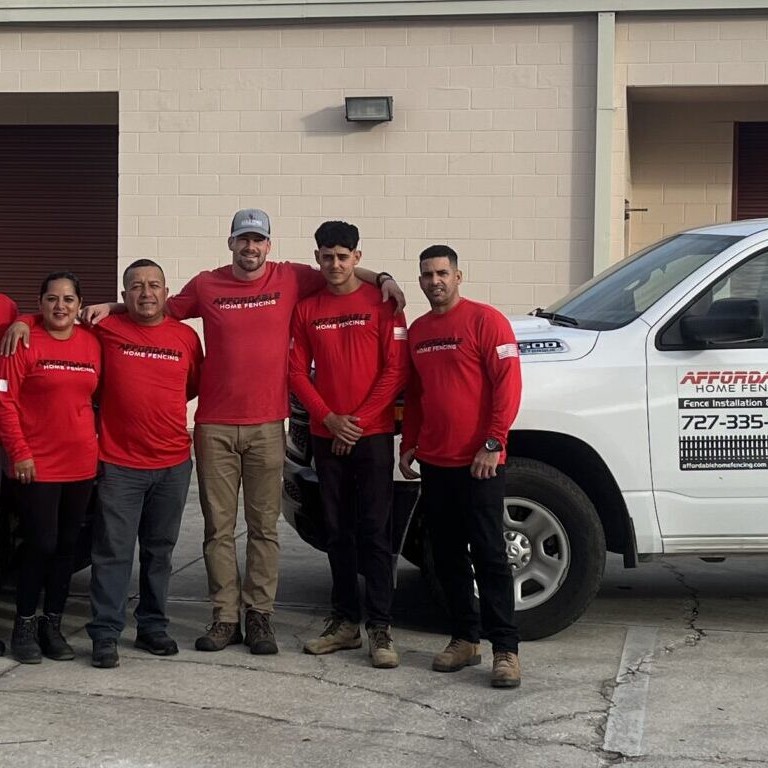
Florida State License #CBC1266423. Permit-pulled on every St. Pete install, no exceptions.
General liability and workers' comp coverage on every job site. Your property is protected.
On-site measurement, written quote, no pressure. We'll spec what your St. Pete property actually needs.
Every install backed by our written workmanship warranty plus the manufacturer's product warranty.
Yes. The City of St. Petersburg requires a building permit for new fence installation in all residential zones. Applications go through the St. Petersburg Codes Compliance Office, and most residential fence permits are issued within 7 to 14 business days. We pull the permit on every St. Pete install so you don't have to navigate the city portal yourself.
The City of St. Petersburg sets fence permit fees based on linear footage and project value. For most residential fence installs the permit runs a small share of total project cost. We include the permit fee in every written estimate and pull it on your behalf.
St. Petersburg sits between Tampa Bay and Boca Ciega Bay with salt air on most sides. Snell Isle, Coffee Pot Bayou, and Bayway Isles waterfront properties need powder-coated aluminum or vinyl because galvanized metal rusts within seasons. Inland St. Pete neighborhoods (Disston Heights, Lakewood Estates) can use the full material range including pressure-treated wood. Vinyl is the lowest-maintenance choice citywide.
St. Petersburg zoning generally allows fences up to 6 feet in residential side and rear yards, and 4 feet in front yards. Corner lots have additional visibility-triangle setbacks. Historic overlay districts (Old Northeast, Kenwood, Roser Park) carry tighter restrictions on style and material in addition to the height limits.
Yes. Old Northeast, Kenwood, Historic Roser Park, and the surrounding overlay districts require a Certificate of Appropriateness through the City of St. Petersburg Historic Preservation office on top of the standard building permit. The review typically restricts material and style to options that match the era of the surrounding bungalow architecture, which usually means wood picket, board-on-board, or shadowbox. We handle the historic submission as part of every install in these districts.
Yes. Florida's Residential Swimming Pool Safety Act requires a barrier at least 4 feet tall around any residential pool, with self-closing, self-latching gates that open outward from the pool. The City of St. Petersburg enforces these rules alongside Pinellas County. Most St. Pete homeowners choose black powder-coated aluminum for the pool barrier.
After permit issuance, most residential installs take 2 to 4 days depending on linear footage, terrain, and material. Historic neighborhoods with mature live-oak canopy (Old Northeast, Kenwood) can take an extra day when post holes hit established root systems. Snell Isle and waterfront properties also add time when post anchors need saltwater rating.
Yes. All of Pinellas County sits in the Florida Building Code 130-mph design wind speed zone. Waterfront exposure on Snell Isle and along Tampa Bay carries the highest engineering requirements. We follow the engineered post-spacing chart for the wind zone on every St. Pete install.
The City of St. Petersburg requires a survey or site plan with the permit application showing the fence location relative to property lines and setbacks. If you don't have a recent survey, the city can sometimes pull older ones on file, or we can recommend a local surveyor. We always confirm property boundaries before setting any post.
Real reviews from real installs in Old Northeast, Snell Isle, Kenwood, downtown St. Pete, and across the city.