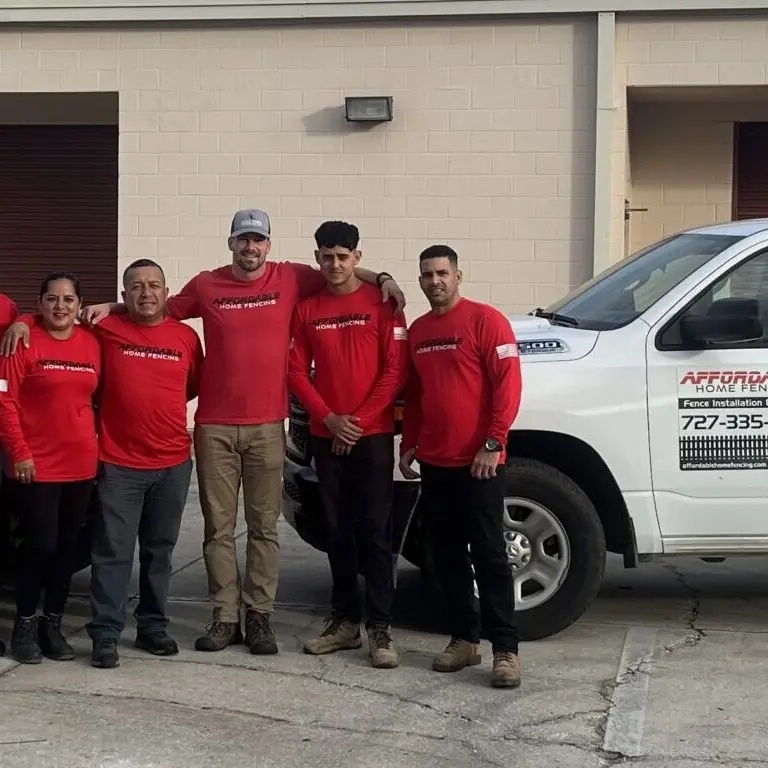






Affordable Home Fencing is headquartered right here in Clearwater. We install residential and commercial fencing across every Clearwater neighborhood, from the barrier-island homes on Clearwater Beach, Sand Key, and Island Estates to the inland communities of Morningside, Countryside, Skycrest, and the Cleveland Street District downtown. We specialize in vinyl, aluminum, wood, and chain-link fences engineered for Florida's heat, humidity, and gulf-coast hurricane wind loads.
Whether you're enclosing a yard a few blocks from Coachman Park, installing a pool fence near the Belleair Causeway, or putting up a salt-air-resistant aluminum perimeter on Sand Key, our team knows Clearwater's permit process, the strict HOA standards in Countryside and on the barrier islands, and the soil and corrosion realities of building this close to the gulf.
Get a Free EstimateHeat-, UV-, and salt-resistant vinyl with 20 to 30 year warranties. Privacy, semi-private, picket, and pool-rated styles for Clearwater homes.
Learn MoreRust-free, pool-code-compliant aluminum in black, bronze, or white powder-coat. The standard for Clearwater Beach and Sand Key salt-air properties.
Learn MorePressure-treated pine, cedar, or cypress fencing built for Florida humidity. Dog-ear, board-on-board, and shadowbox styles for HOA-friendly back yards.
Learn MoreGalvanized and black powder-coated chain-link for dog runs, commercial perimeters, and budget residential installs across Clearwater.
Learn More


Clearwater isn't one city. It's a barrier island, a mainland, a downtown waterfront, and a dozen master-planned and mid-century neighborhoods, and the right fence varies by which one your property is in. Salt air off Clearwater Harbor and the Gulf eats raw steel within a few seasons. Inland properties along US-19 and Sunset Point Road sit far enough from the water that galvanized chain-link and pressure-treated pine perform fine. Knowing which side of that line your home sits on is half the spec.
The barrier islands run along Gulf Boulevard, connected to the mainland by Memorial Causeway and the Belleair Causeway. Salt spray, UV, and humid Gulf air are constant. We install almost exclusively powder-coated aluminum and architectural-grade vinyl on these properties. Pool enclosures dominate Sand Key and Island Estates; both have HOAs that approve aluminum view fences in black or bronze but rarely permit chain-link. Clearwater Beach's mix of single-family and short-term-rental properties leans toward 6-foot vinyl privacy on rear lot lines.
Countryside is Clearwater's largest master-planned community, with neighborhood subassociations that each carry their own architectural review form. Most approve white or tan vinyl privacy in 6-foot height; some require shadow-box or board-on-board so both sides look finished. Belleair (which sits just inside the Clearwater service area) has the strictest visibility-triangle setbacks in Pinellas County, and Skycrest's mid-century homes often need fence styles that match the era: picket, three-rail, or simple wood privacy.
The streets east of Fort Harrison Avenue and around Coachman Park hold most of Clearwater's mid-century and pre-WWII housing stock. Lot sizes are smaller, code height limits are tighter on front yards, and traditional wood fencing fits the architecture better than vinyl. Cypress and cedar handle Florida humidity better than untreated pine. Properties near Old Clearwater Bay still see salt air carried inland by Gulf breezes, so any metal hardware needs to be marine-grade.
The City of Clearwater Building Department at 100 S. Myrtle Avenue issues permits for every new fence inside city limits, including replacements. Residential fence height tops out at 6 feet on side and rear yards, 4 feet in front yards, with additional setbacks on corner lots and waterfront parcels. Pool enclosures must meet Florida's Residential Swimming Pool Safety Act: 4-foot minimum barrier, self-closing and self-latching gates that open outward. We pull the permit, file the survey, and notify Sunshine 811 for utility locates on every Clearwater install.
Florida State License ##CBC1266423. Permit-pulled on every Clearwater install, no exceptions.
General liability and workers' comp coverage on every job site. Your property is protected.
On-site measurement, written quote, no pressure. We'll spec what your Clearwater property actually needs.
Every install backed by our written workmanship warranty plus the manufacturer's product warranty.
Yes. The City of Clearwater requires a building permit for any new fence, including replacements. Applications go through the Clearwater Building Department at 100 S. Myrtle Ave, and most residential fence permits are issued within 5 to 10 business days. We pull the permit on every Clearwater install so you don't have to.
Properties on Clearwater Beach, Sand Key, Island Estates, and anywhere within roughly a mile of the Gulf see accelerated corrosion on raw metal. Galvanized chain-link still works fine inland but rusts faster near the water.
For coastal homes we recommend powder-coated aluminum or vinyl, both of which shrug off salt and humidity. Pressure-treated wood holds up if maintained, but plan on more frequent staining than you'd need at an inland Pinellas property.
Clearwater zoning generally allows fences up to 6 feet in residential side and rear yards, and 4 feet in front yards. Corner lots and waterfront properties have additional visibility-triangle setbacks. We confirm your specific allowance with the city's planning department before we draw up your install.
Yes. Florida's Residential Swimming Pool Safety Act requires a barrier at least 4 feet tall around any residential pool, with self-closing, self-latching gates that open outward from the pool. Pinellas County enforces these rules alongside city zoning.
Most Clearwater homeowners choose black powder-coated aluminum so the barrier meets code without blocking the water view.
Yes. Countryside and several Island Estates subassociations have material and color rules written into their covenants. Most allow black aluminum or white vinyl, and few permit chain-link in front-facing yards. Bring your HOA architectural review form to the estimate and we'll spec a fence that gets approved on the first submission.
After permit issuance, most residential installs take 2 to 4 days depending on linear footage, terrain, and material. Coastal properties on Sand Key or the beach can take an extra day if we need saltwater-rated post anchors. We schedule around weather and notify Sunshine 811 for utility locates before any post hole goes in.
The City of Clearwater Building Department sets the permit fee by linear footage and project value. For most residential fence installs the permit runs a small share of the total project cost. We include the permit cost in every written estimate, pull it on your behalf, and submit the site plan to the Building Department on 100 S. Myrtle Avenue so you don't have to.
Yes. Pinellas County falls in the Florida Building Code 130-mph design wind speed zone, which means fences (and the posts that hold them up) must be engineered to resist that load. In practice that means deeper post footings, tighter post spacing, and concrete depths that vary by material. We follow the engineered post-spacing chart for the wind zone on every Clearwater install, residential or commercial.
The City of Clearwater requires a survey or site plan with the permit application showing the fence location relative to property lines and setbacks. If you don't have a recent survey, the city can sometimes pull older ones on file, or we can recommend a local surveyor. We always confirm property boundaries before setting any post because that's where most neighbor disputes start.
Real reviews from real installs in Countryside, Island Estates, Sand Key, Belleair, and across Clearwater.