
Vinyl fencing is one of the smartest investments you can make for your property. It looks sharp, holds up against the elements, and requires far less upkeep than wood or metal alternatives. If you’ve already done your research on how vinyl stacks up against wood and aluminum options, you already know why so many homeowners choose it.
That said, “low maintenance” does not mean “no maintenance.” Dirt, mildew, algae, and UV exposure will gradually dull even the best vinyl fence if you ignore it. The good news is that keeping your fence looking fresh is straightforward once you know the right steps.
This guide walks you through everything — from basic rinsing to tackling stubborn stains, inspecting for damage, and preventing long-term wear. Follow these methods consistently and your fence will stay clean, strong, and attractive for decades.
Understanding Vinyl Fences and Maintenance Basics
Vinyl fencing is made from polyvinyl chloride, commonly known as PVC. It’s engineered to resist moisture, insects, and rot — problems that constantly plague wood fences. Understanding what your fence is made of helps you choose the right cleaning products and avoid accidental damage.
Key Benefits and Expected Lifespan
A well-maintained vinyl fence can last anywhere from twenty to thirty years or more. That impressive fence longevity comes from the material’s natural resistance to the elements, but maintenance still plays a major role in preserving its appearance and structural integrity.
Here are the core benefits that make vinyl fencing worth protecting:
- Resistant to rot, rust, and insect damage
- Does not require painting or staining
- Holds color well with proper UV protection measures
- Easy to clean with basic household tools
- Maintains structural strength through temperature changes
Fading and discoloration are the most common cosmetic issues vinyl owners face. These problems are largely preventable with routine cleaning and occasional use of a quality vinyl cleaner designed to restore surface brightness.
Tools and Materials Needed
Before you start any cleaning or maintenance task, gather your supplies. Having everything ready saves time and ensures you don’t skip steps.
| Tool or Material | Purpose |
|---|---|
| Garden hose | Rinsing loose dirt and debris |
| Soft brush or sponge | Scrubbing fence panels without scratching |
| Bucket | Mixing soap and water solutions |
| Mild dish soap | General surface cleaning |
| White vinegar | Removing light mildew and mineral deposits |
| Bleach solution | Treating heavy mold and algae growth |
| Pressure washer | Deep cleaning large fence sections |
| Vinyl cleaner | Restoring shine and surface protection |
| Lubricant spray | Maintaining fence gates and hardware |
You don’t need expensive equipment to maintain your fence effectively. Most of these items are already in your home or available at any hardware store for minimal cost.
Routine Cleaning Methods
Routine cleaning is the foundation of good vinyl fence maintenance. The more consistently you clean, the less effort each session requires. Dirt and organic buildup are much easier to remove when they haven’t had time to set into the surface.
Hose Rinsing for Everyday Maintenance
A simple rinse with a garden hose is the easiest thing you can do to keep your fence looking clean between deeper cleaning sessions. Aim the water at the fence panels from top to bottom, letting gravity carry the dirt downward and away from the surface.
This method works best for removing loose dust, pollen, and light surface grime. It takes only a few minutes and makes a noticeable difference in overall appearance.
Make rinsing a habit after storms or windy days when debris tends to collect along fence posts and panel edges. Consistent rinsing prevents buildup that leads to staining and discoloration over time.
Soap and Water Deep Cleaning Steps
For a more thorough clean, soap and water is your go-to method. Mix a few drops of mild dish soap into a bucket of warm water. Use a soft brush or sponge to scrub the fence panels in sections, working from top to bottom.
Rinse each section thoroughly with your garden hose before moving to the next. Leaving soap residue on the surface can attract more dirt and create a filmy appearance.
Repeat this process at least a few times per year, or more frequently if your fence is near trees, a garden, or a high-traffic area. Seasonal maintenance like this keeps stains from becoming permanent and extends the life of your fence significantly.
Advanced Cleaning Techniques
Sometimes soap and water isn’t enough. Heavy mold and mildew, algae growth, and deep stains require more targeted approaches. These advanced techniques are safe for vinyl when done correctly.
Safe Pressure Washing Guidelines
A pressure washer can dramatically speed up the cleaning process, especially for long fence runs or heavily soiled sections. However, using too much pressure can damage fence panels, force water into joints, or cause surface scratching.
Follow these guidelines to pressure wash safely:
- Use a wide-angle nozzle, typically forty degrees or wider
- Keep the pressure setting at or below 1500 PSI
- Hold the nozzle at least twelve inches from the fence surface
- Move in smooth, horizontal strokes to avoid streaking
- Never aim directly at panel joints or post caps
If you live in a humid region, pressure washing once or twice a year is especially helpful for algae removal. Homeowners dealing with fence maintenance in Florida’s climate know that moisture and heat create ideal conditions for mold and algae to thrive, making regular pressure washing a smart seasonal habit.
Household Solutions for Stains, Mildew, and Algae
You don’t always need commercial products to tackle tough stains. Several effective solutions can be made from common household items.
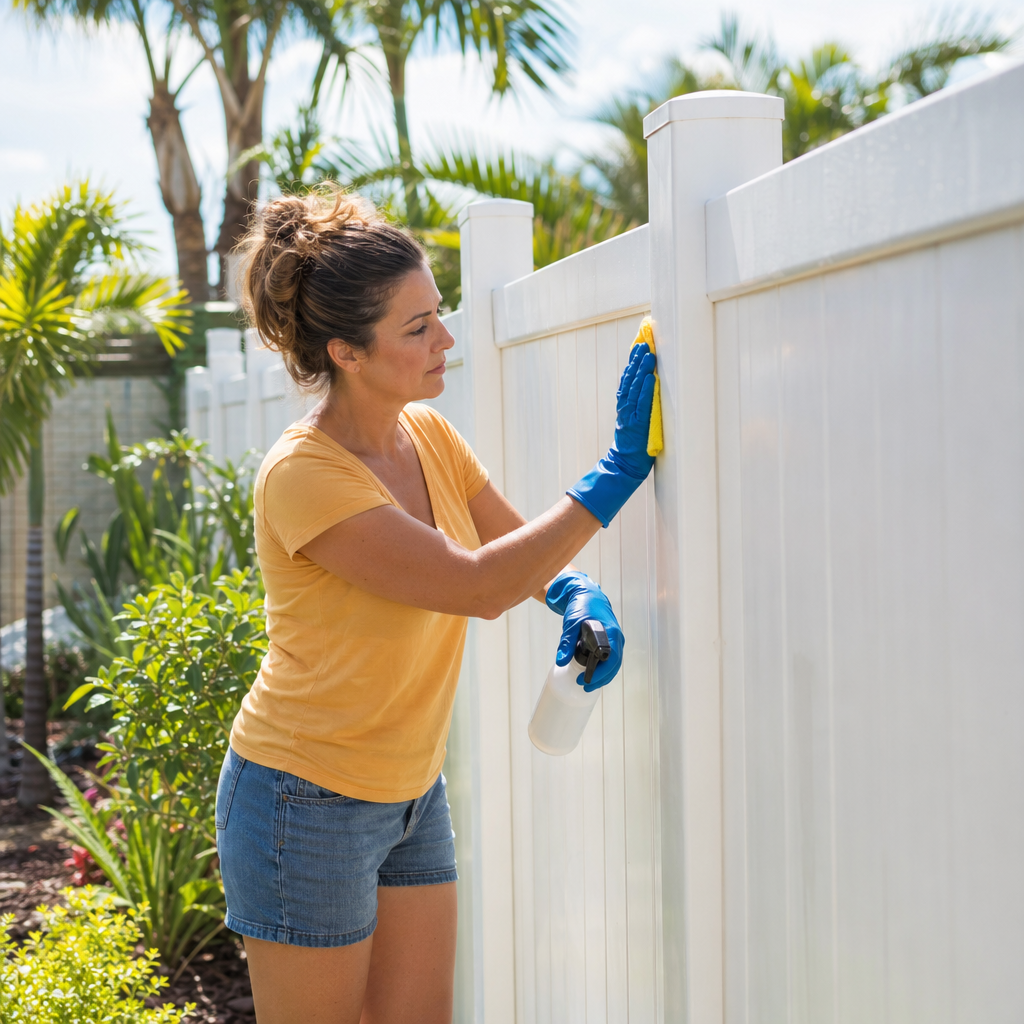
White vinegar is excellent for light mildew spots and mineral deposits. Mix equal parts white vinegar and water in a spray bottle, apply it to the affected area, let it sit for a few minutes, then scrub with a soft brush and rinse clean.
For heavier mold and mildew, a bleach solution works more aggressively. Mix one part bleach with four parts water, apply with a sponge or brush, and let it sit for five to ten minutes before rinsing thoroughly. Always wear gloves and avoid letting the solution contact nearby plants.
For stubborn stains like rust, grease, or paint, a dedicated vinyl cleaner is the most reliable option. These products are formulated specifically for PVC surfaces and won’t cause discoloration or surface damage when used as directed.
Inspections, Repairs, and Prevention Tips
Cleaning keeps your fence looking good, but inspections keep it structurally sound. Catching small problems early prevents them from becoming expensive repairs later.
Regular Damage Checks and Gate Maintenance
Walk the full length of your fence at least a couple of times per year and look closely at every component. Check fence posts for signs of shifting, leaning, or ground-level cracking. Examine fence panels for cracks, chips, or scratches that could worsen over time.
Pay close attention to fence gates, which experience more stress than any other part of the fence. Check hinges for rust or looseness, and test the latch mechanism to make sure it opens and closes smoothly.
Lubrication is essential for gate hardware. Apply a silicone-based lubricant to hinges and latch components at least once a year. This prevents squeaking, reduces wear, and keeps the gate operating properly through temperature changes.
Common Troubleshooting and Avoidance Strategies
Even with regular care, certain issues can develop. Knowing how to address them quickly prevents minor problems from escalating.
- Scratches: Light surface scratches can often be buffed out with a vinyl cleaner and a soft cloth. Deep scratches may require panel replacement.
- Discoloration: Yellowing or graying is usually caused by UV exposure or oxidation. A vinyl cleaner with UV protection can restore brightness and slow future fading.
- Loose panels: Fence panels that rattle or shift may have cracked connectors or loose fence posts. Inspect the base of each post and tighten or replace hardware as needed.
- Mold and mildew recurrence: If mold keeps returning in the same spots, check for drainage issues or areas where moisture collects. Improving airflow around the fence base can reduce recurring growth.
Avoid using abrasive scrubbers, steel wool, or harsh chemical solvents on vinyl surfaces. These can cause permanent scratches and strip the surface finish, making the fence more vulnerable to staining and UV damage going forward.
Conclusion
Vinyl fencing is built to last, but it performs best when you give it consistent attention. Routine rinsing, periodic deep cleaning, and annual inspections are all it takes to keep your fence looking sharp and structurally sound year after year.
The effort involved is minimal compared to what wood requires. If you’ve ever dealt with the ongoing demands of maintaining a wood fence the right way, you’ll appreciate just how manageable vinyl upkeep truly is.
Start with the basics, address problems as soon as you spot them, and use the right products for each task. Your fence will reward that consistency with decades of clean, attractive performance.
FAQ
Can I use a pressure washer on my vinyl fence?
Yes, a pressure washer is safe for vinyl fencing when used correctly. Keep the pressure at or below 1500 PSI and use a wide-angle nozzle to avoid damaging fence panels or forcing water into joints. Maintain at least twelve inches of distance from the surface and use smooth, even strokes. Pressure washing is particularly effective for algae removal and large fence sections that would take too long to scrub by hand.
How do I remove mildew or algae from vinyl?
For light mildew, a mixture of white vinegar and water applied with a soft brush works well. For heavier mold and algae growth, use a diluted bleach solution — one part bleach to four parts water — and let it sit briefly before scrubbing and rinsing. A commercial vinyl cleaner is also effective and gentler on the surface. Always rinse thoroughly after using any cleaning solution to prevent residue buildup.
How often should I inspect and clean my vinyl fence?
A basic rinse with a garden hose can be done as often as needed, especially after storms. Deep cleaning with soap and water should happen at least two to three times per year. Full inspections of fence posts, fence panels, and fence gates should be completed at least twice annually. Seasonal maintenance checks help you catch early signs of damage, discoloration, or hardware wear before they become bigger problems.